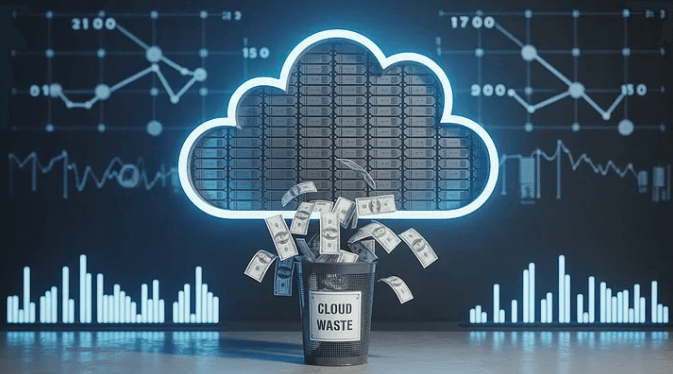
Cloud adoption has transformed how businesses build, scale, and deliver applications. Platforms like AWS and Azure offer unmatched flexibility—but with that flexibility comes a hidden challenge that many organizations underestimate: uncontrolled cloud spending.
One of the biggest—and most overlooked—contributors to this problem is idle development and staging environments.
They don’t crash systems.
They don’t trigger alerts.
But they silently drain your cloud budget—often inflating costs by 30–40%.
Let’s dive deeper into why this happens, how it impacts your business, and what you can do to fix it. 👇
💡 Understanding Dev & Staging Environments
Modern development workflows rely heavily on multiple environments to ensure speed and quality:
- Development (Dev): Where engineers build and test features
- Staging: A near-production setup used for final testing
- QA/Sandbox: Environments for experimentation and validation
These environments are essential for agile and DevOps-driven teams. They allow rapid innovation without affecting live systems.
However, the real issue begins when these environments continue running even when no one is actively using them.
👉 Late nights, weekends, post-deployment phases—these environments often remain active 24/7.
And in cloud computing, running equals billing.
⚠️ The Silent Cost Driver: Idle Resources
Unlike traditional infrastructure, cloud platforms charge based on usage—but “usage” doesn’t necessarily mean “active work.”
If a virtual machine, database, or storage system is running—even idle—you’re paying for it.
Here’s where costs quietly pile up:
✔ Compute instances left running with zero activity
✔ Idle databases consuming memory and storage
✔ Load balancers with no traffic
✔ Unused storage volumes and snapshots
✔ Forgotten test environments from past projects
💸 Over time, these unused resources can account for a massive portion of your cloud bill—without delivering any business value.
📊 Why Most Organizations Miss This Problem
If the impact is so significant, why do companies overlook it?
Because idle cloud waste is not obvious. It hides behind operational complexity.
🔹 1. Lack of Visibility
Most cloud dashboards focus on usage—not inefficiency.
You see what you’re spending, but not where you’re wasting.
🔹 2. Shared Responsibility Confusion
Developers create environments, DevOps manages infrastructure, finance tracks costs—
but no one owns cost accountability end-to-end.
🔹 3. “Always-On” Culture
Teams prefer keeping environments live “just in case” they need quick access.
Convenience wins over cost optimization.
🔹 4. Rapid Development Cycles
In fast-moving teams, environments are spun up quickly—but rarely cleaned up.
🚀 Speed increases.
📉 Cost discipline decreases.
💼 The Real Business Impact
This isn’t just a technical inefficiency—it’s a strategic problem.
💰 1. Significant Cost Overruns
Spending 30–40% extra on cloud resources directly impacts profitability.
📉 2. Lower ROI on Cloud Investments
You’re investing in scalability—but not using it efficiently.
⚡ 3. Operational Inefficiency
Teams focus on building and scaling, while optimization takes a backseat.
❌ 4. Misleading Cost Insights
Your cloud bills may look justified—but hidden waste skews the reality.
🔍 How to Identify Idle Environments
The first step to solving the problem is visibility.
Here are clear indicators of idle resources:
- 🔸 CPU utilization consistently below 5–10%
- 🔸 No user activity or deployments for days/weeks
- 🔸 Resources running outside working hours
- 🔸 Orphaned volumes or unattached storage
- 🔸 Duplicate or forgotten environments
📌 If an environment isn’t actively contributing to development or testing—it’s likely costing you unnecessarily.
🛠️ Proven Strategies to Eliminate Cloud Waste
The good news? This problem is highly fixable with the right approach.
✔ 1. Automate Shutdowns
One of the simplest and most effective solutions:
👉 Automatically turn off dev and staging environments during non-working hours.
- Nights
- Weekends
- Holidays
💡 This alone can reduce costs significantly without affecting productivity.
✔ 2. Implement Smart Scheduling
Define when environments should run—and when they shouldn’t.
- Start in the morning
- Shut down in the evening
🔄 Automation ensures consistency without manual intervention.
✔ 3. Rightsize Your Resources
Dev and staging environments don’t need production-level capacity.
- Use smaller instances
- Scale only when testing requires it
📉 Avoid paying premium costs for non-critical workloads.
✔ 4. Enforce Tagging & Governance
Tag every resource with:
- Owner
- Environment type
- Purpose
- Expiry or review date
📊 This improves accountability and makes tracking waste much easier.
✔ 5. Continuous Cost Monitoring
Move beyond basic monitoring.
👉 Focus on cost efficiency metrics, not just performance.
- Identify underutilized resources
- Act on anomalies quickly
- Optimize continuously
🔵 How DC9India Helps You Take Control
At DC9India, we go far beyond traditional cloud management—we help organizations gain complete visibility, enforce control, and continuously optimize their cloud ecosystems.
In most businesses, cloud cost optimization is treated as a one-time activity. But in reality, it’s an ongoing process that requires deep analysis, intelligent automation, and strong governance.
That’s exactly where we come in.
We don’t just highlight problems—we engineer sustainable solutions that ensure your cloud environment remains efficient, scalable, and cost-effective as your business grows.
👉 Because optimizing cloud costs isn’t about cutting corners—it’s about eliminating waste while maximizing performance and value.
💡 Our Approach:
Our approach is built on a combination of technology, strategy, and continuous improvement.
🔍 1. Deep Cloud Assessment & Cost Visibility
We start by conducting a comprehensive audit of your AWS and Azure environments.
This includes:
✔ Mapping all active resources across environments
✔ Identifying idle, underutilized, and orphaned assets
✔ Analyzing usage patterns, billing trends, and cost anomalies
✔ Breaking down spend by teams, services, and environments
📊 This gives you something most organizations lack:
complete clarity on where your money is actually going.
🤖 2. Intelligent Automation & Scheduling
Manual cost control doesn’t scale—automation does.
We implement smart automation frameworks that:
✔ Automatically shut down idle dev and staging environments
✔ Schedule resource usage based on working hours
✔ Restart environments only when required
✔ Eliminate human dependency and manual errors
⏱️ Result:
You stop paying for resources when they’re not in use—without disrupting workflows.
⚙️ 3. Resource Rightsizing & Performance Balance
Over-provisioning is one of the biggest cost drivers in cloud environments.
We ensure that every resource is:
✔ Sized according to actual workload requirements
✔ Optimized for both cost and performance
✔ Scaled dynamically when demand changes
📉 This eliminates unnecessary spend while maintaining high application performance.
🏷️ 4. Governance, Tagging & Cost Accountability
Without governance, cloud environments quickly become chaotic.
We implement:
✔ Standardized tagging strategies (owner, environment, purpose)
✔ Budget controls and usage policies
✔ Environment lifecycle management (creation to decommissioning)
✔ Accountability frameworks across teams
🛡️ This ensures that every resource has a purpose—and an owner.
📈 5. Continuous Monitoring & FinOps Integration
Cloud optimization is not a one-time fix—it’s a continuous process.
We enable:
✔ Real-time cost monitoring and alerts
✔ Identification of inefficiencies as they occur
✔ FinOps practices to align cloud spend with business outcomes
✔ Ongoing reporting with actionable insights
📊 You don’t just see your costs—you understand and control them.
🔄 6. Proactive Optimization & Waste Prevention
Instead of reacting to high bills, we focus on preventing waste before it happens.
✔ Detect unused environments early
✔ Eliminate zombie resources automatically
✔ Optimize workloads continuously
✔ Prevent cost spikes before they impact your budget
🚀 This shifts your organization from reactive cost management to proactive optimization.
🎯 The Results You Can Expect
With DC9India, organizations don’t just reduce costs—they gain complete control and clarity over their cloud ecosystem.
🚀 Up to 40% reduction in cloud waste
📉 Lower, optimized, and more predictable cloud bills
⚡ Improved infrastructure performance and efficiency
📊 Real-time visibility into usage, costs, and optimization opportunities
🔍 Better decision-making with actionable, business-focused insights
🛡️ Stronger governance and reduced risk of uncontrolled cloud sprawl
⏱️ Faster response to inefficiencies with automated actions
💼 Improved ROI on cloud investments
🔚 Final Thoughts
Idle dev and staging environments are one of the most common yet ignored sources of cloud waste.
They operate silently in the background—
consuming resources, increasing bills, and reducing ROI.
👉 The reality is simple:
If you’re not actively managing your cloud, you’re overpaying for it.
💬 Ready to Optimize Your Cloud Spend?
Stop letting idle environments drain your budget.
Partner with DC9India to uncover hidden cost leaks, implement smart automation, and take full control of your cloud infrastructure. 🚀
🌐 Visit us: 🔗 www.dc9india.com